

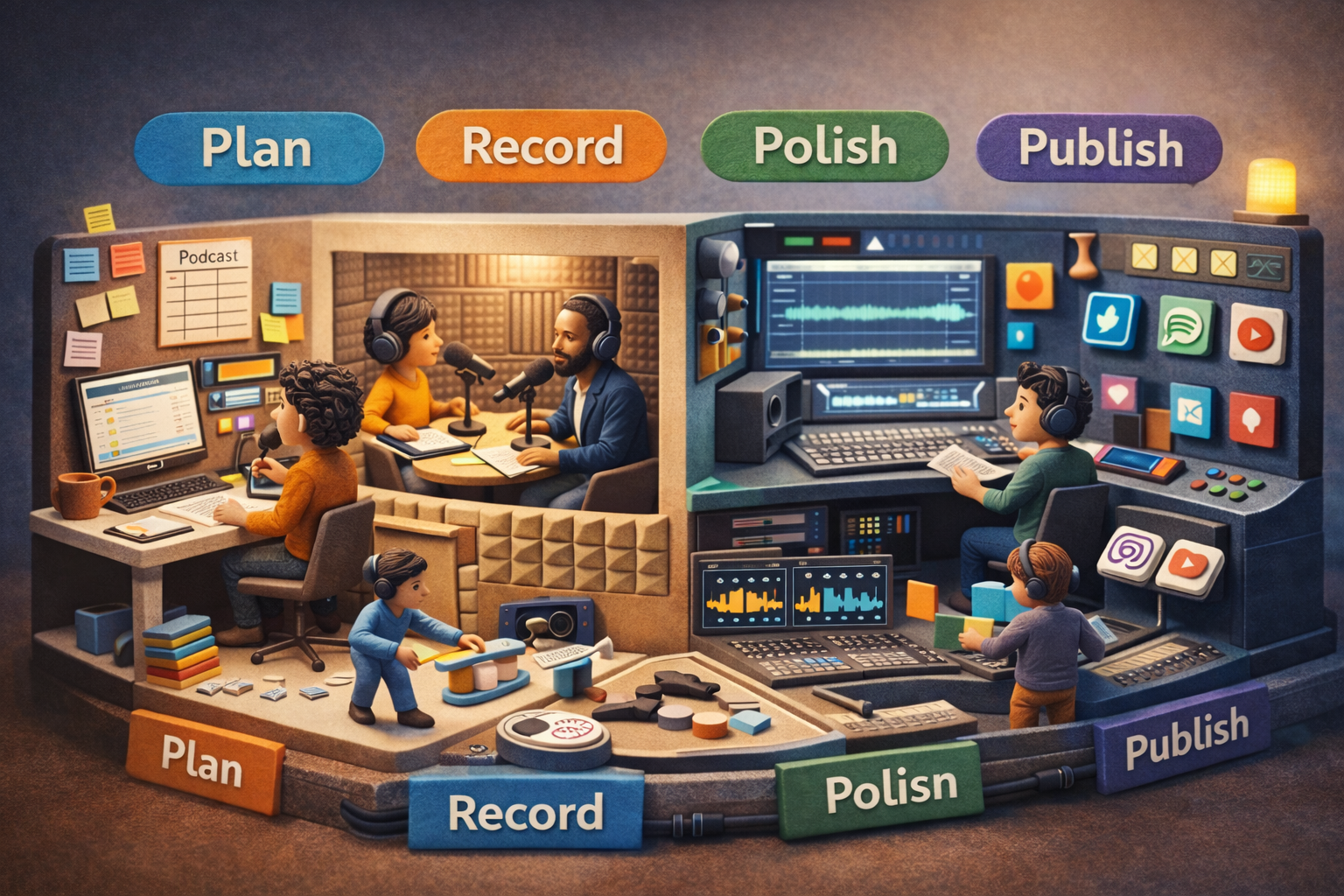
Producing a professional podcast requires careful planning, technical skill, and attention to audience experience. While creating compelling content is critical, the production process ensures that your podcast sounds polished, engages listeners, and stands out in a crowded market. Every step, from planning the concept to distributing the final episode, contributes to the overall quality and perception of your show.
Professional podcast production is more than simply recording audio. It involves pre-production planning, selecting the right equipment, recording techniques, editing for clarity and pacing, and preparing the final files for distribution. Each element plays a critical role in ensuring the final product meets listener expectations.
The team at Ankord Media provides comprehensive support for podcasters, combining technical expertise, creative guidance, and audience-focused strategies to streamline production and elevate quality.
Planning Your Podcast
The foundation of any successful podcast lies in careful planning. This stage defines your show’s identity, target audience, and content strategy. Without a clear plan, even the most talented hosts risk producing inconsistent or unfocused episodes.
Key aspects of planning include:
- Defining Your Audience: Identify who your listeners are and what problems, interests, or desires your podcast will address.
- Choosing a Format: Decide between interviews, solo episodes, narrative storytelling, or hybrid formats.
- Episode Structure: Outline segments, timing, and recurring features to maintain consistency.
- Scheduling: Plan recording and release timelines to establish a predictable publishing rhythm.
Effective planning sets the stage for production efficiency. By defining goals, segment structures, and audience expectations, podcasters ensure that each episode delivers value. Planning also allows for better coordination with guests, content preparation, and marketing efforts.
Once a plan is established, hosts can focus on execution rather than improvisation, resulting in episodes that feel intentional and professional. Planning also creates opportunities to incorporate unique branding elements, thematic music, and visual assets that reinforce identity and attract listeners.
Recording Techniques for High-Quality Audio
Recording is the most critical technical step in podcast production. Audio quality directly affects listener retention, engagement, and perceived professionalism. Poor audio can distract or even deter potential subscribers, regardless of content quality.
Important considerations include:
- Microphone Selection: Choose microphones suited for your recording environment and voice type.
- Environment Control: Record in quiet spaces, minimize echo, and control ambient noise.
- Monitoring: Use headphones to track audio levels and detect issues in real-time.
- Recording Software: Select software that allows for high-quality capture and ease of editing.
Recording consistently high-quality audio requires practice and attention to detail. Small adjustments to microphone positioning, gain levels, and recording environments can have a significant impact on final output. Developing familiarity with recording equipment and software ensures smoother sessions and reduces time spent correcting errors in post-production.
Audio quality also signals professionalism to listeners. Clear, balanced audio builds trust and makes content easier to consume. For podcasters managing multiple episodes or complex setups, working with experts like Ankord Media ensures every recording is technically sound and optimized for production efficiency.
Editing and Post-Production
Editing transforms raw recordings into polished episodes. This stage includes removing mistakes, adjusting volume levels, adding music or sound effects, and ensuring smooth transitions. Proper editing enhances storytelling, pacing, and listener engagement.
Editing steps include:
- Noise Reduction: Remove background noise and unwanted sounds.
- Content Refinement: Cut filler words, long pauses, or redundant sections.
- Audio Balancing: Normalize volume levels and adjust EQ for clarity.
- Adding Enhancements: Integrate intro/outro music, sound effects, or advertisements.
Post-production not only improves technical quality but also shapes the listening experience. Thoughtful editing emphasizes key points, maintains pacing, and ensures clarity of communication. Balancing technical polish with content authenticity is critical to maintaining listener trust and engagement.
Professionally edited episodes are more likely to be shared and recommended. Attention to audio details reduces listener fatigue and increases retention. Collaborating with production experts such as Ankord Media can streamline this process, ensuring episodes meet professional standards while maintaining the unique voice of the host.
Distribution and Promotion
Publishing and promoting your podcast ensures that high-quality episodes reach the intended audience. Proper distribution also affects discoverability, subscription growth, and overall reach.
Distribution strategies include:
- Hosting Platforms: Select a reliable podcast host that supports analytics, syndication, and file management.
- Directory Submission: Submit your podcast to Apple Podcasts, Spotify, Google Podcasts, and other major platforms.
- Marketing and Promotion: Leverage social media, newsletters, and guest networks to drive awareness.
- Tracking Analytics: Monitor downloads, listener demographics, and engagement to inform future episodes.
Effective distribution and promotion maximize the impact of production efforts. By understanding audience behavior and using analytics, podcasters can refine their content strategy and increase reach over time. Consistent promotion reinforces brand recognition and encourages repeat engagement from listeners.
Engaging marketing strategies, combined with professional production and editing, create a cohesive listener experience. By aligning distribution and promotion with content goals, podcasters ensure episodes are not only well-made but also accessible and discoverable by target audiences.
Closing Reflections on Professional Podcast Production
Producing a professional podcast is a multi-step process that requires careful planning, technical skill, and strategic execution. By focusing on planning, recording, editing, and distribution, creators can elevate the quality of their show, enhance listener engagement, and grow their audience.
Investing in professional production not only improves sound quality but also strengthens the credibility and perceived value of the content. Well-produced episodes are more likely to attract loyal listeners, encourage shares, and drive subscriptions.
Working with an experienced partner such as Ankord Media can streamline every step of production. Their team provides guidance on technical setup, editing, and promotion, allowing podcasters to focus on content creation while maintaining high-quality output consistently. This professional support ensures that every episode reaches its potential in both engagement and audience growth.

Book an Intro Call
Frequently Asked Questions
A quality microphone, headphones, and recording software are essential. Additional tools like pop filters, audio interfaces, and soundproofing enhance the final product. Testing and experimentation are crucial to determine the best setup for your environment.
Editing time varies by episode length and complexity. Simple episodes may take a few hours, while detailed productions with multiple segments, music, or guests can take a day or more. Professionals like Ankord Media help streamline this process efficiently.
Yes, but professional support improves quality and reduces errors. Outsourcing technical tasks to experts at Ankord Media allows creators to focus on content while ensuring sound quality, consistency, and technical polish.
Skipping planning or neglecting editing are frequent errors. Poor audio quality, inconsistent structure, and weak promotion can all undermine a strong concept. Attention to each stage ensures episodes are professional and engaging.
Distribution, marketing, and analytics are key. Submitting to multiple platforms, promoting episodes through social channels, and tracking listener behavior allow creators to refine their approach, attract more listeners, and encourage repeat engagement.