How Bay Area B2B SaaS Startups Should Build a Content and Copywriting Strategy Tied Directly to Pipeline and Revenue


Introduction
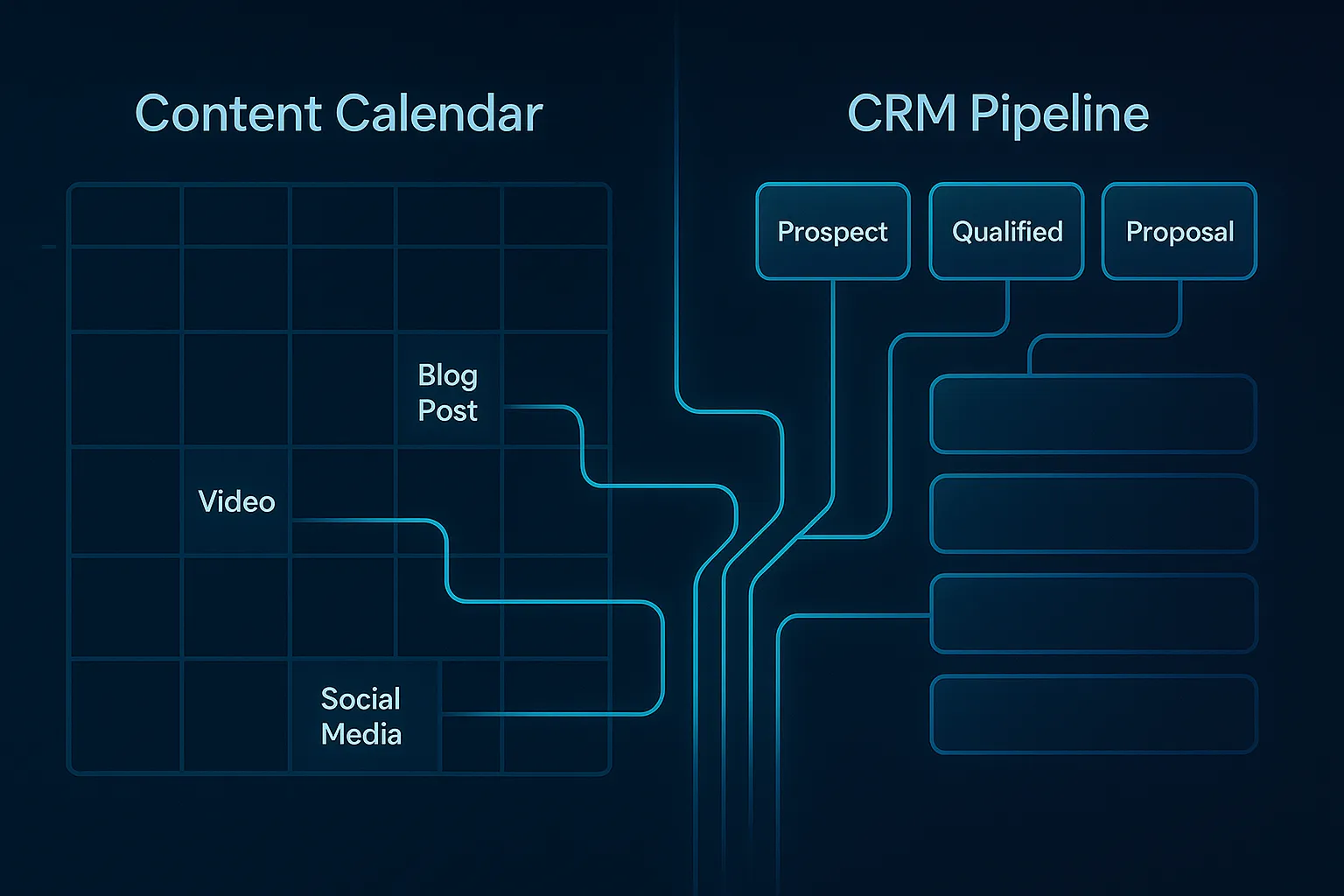
Bay Area B2B SaaS startups do not need more random blog posts. They need a content and copywriting strategy that behaves like a revenue program: it supports specific pipeline targets, accelerates deals, and gives sales teams material they actually use. To do that, you have to design content around buyer journeys, deal stages, and account strategies, not abstract topics. This article walks through how to build that kind of strategy step by step.
Quick Answer
Bay Area B2B SaaS startups should build a content and copywriting strategy by starting from revenue and pipeline goals, then working backward to buyer journeys, deal stages, and account plans. The team should define clear ICPs and use cases, map content to each stage of the funnel, and prioritize formats that directly influence opportunities and expansion, such as case studies, product narratives, sales enablement assets, and founder-led thought leadership. A shared planning process with sales, marketing, and RevOps, plus measurement tied to opportunity creation, influenced revenue, and sales cycle length, keeps the system anchored to real pipeline instead of vanity metrics.
1. Start with specific pipeline and revenue targets
Before choosing topics, you need concrete numbers and time frames.
- What is the new ARR target for the next 12 months?
- How much pipeline do you need to support that target, based on current win rates?
- How much of that pipeline should come from inbound versus outbound, partners, or PLG?
Turn those into clear content objectives, for example:
- “Contribute 3 new qualified opportunities per month from inbound for our core ICP.”
- “Shorten the sales cycle for mid-market deals by 15 percent with better enablement content.”
This makes content and copywriting a tool to close a gap that already exists in your forecast, not a separate marketing activity. It also gives you a way to say no to ideas that do not serve a specific pipeline goal.
2. Define ICPs, use cases, and buying committees in detail
Next, clarify exactly who the content must move and how.
For each core ICP:
- Industry and company profile
- Key job titles and roles on the buying committee
- Main use cases and jobs to be done
- Current tools and workflows
- Trigger events that start a search for a solution
Then list objections and friction by role:
- Economic buyer worries about budget and ROI.
- Technical buyer worries about integration and risk.
- Day-to-day user worries about workload and usability.
This matrix becomes the backbone of your content and copy. It tells you who needs which message, what proof to prioritize, and how specific each piece should be. Some Bay Area content partners, including Ankord Media, use this level of detail to make sure every new piece is aimed at a specific combination of role, use case, and objection, instead of a generic persona.
3. Map the full SaaS funnel to content jobs
Now connect that ICP work to your actual funnel stages. A typical B2B SaaS flow might look like:
- Problem and category discovery
- Education and alignment on approach
- Solution and vendor comparison
- Internal business case and approvals
- Implementation, activation, and expansion
For each stage, ask:
- What needs to be proven for the deal to move forward?
- Who needs to be convinced at this moment?
- What existing content is already working?
- Where are deals stalling today?
Turn this into a content “jobs” list, such as:
- “Help directors explain the problem and solution internally.”
- “Give champions materials to defend the price.”
- “Show technical teams how integration actually works.”
This keeps your strategy focused on moving deals one stage at a time instead of publishing broad awareness pieces with no direct link to pipeline.
4. Translate pipeline needs into concrete content plays
With funnel jobs defined, you can choose specific plays that support revenue. Examples for B2B SaaS:
- Opportunity creation plays
- Problem-focused articles that speak to urgent triggers.
- Founder content that frames a new category or approach.
- Landing pages tailored to specific verticals or use cases.
- Sales acceleration plays
- Deep, specific case studies that mirror target segments.
- One-pagers and battlecards aligned to competitive dynamics.
- Narrative decks with consistent messaging and proof points.
- Expansion and retention plays
- “What else can we do with this product” guides for existing customers.
- Adoption and onboarding content that reduces drop-off.
- Success stories focused on expansion or multi-product adoption.
Each play should be documented with:
- Target audience and deal stage
- Primary revenue metric (opportunities, win rate, expansion)
- Primary owner (marketing, product marketing, or sales)
- Distribution plan (email, outbound, paid, organic, events)
If you cannot name the deal stage and owner, the play is not ready.
5. Design a quarterly editorial plan around deals, not topics
Instead of a generic calendar such as “two blogs per week,” organize content around the realities of your pipeline:
- Major campaigns and launches
- Key trade shows or founder appearances
- Renewals and expansion windows
- Seasonal patterns in your buyers’ budgets
Build a simple quarterly roadmap:
- Choose one or two priority pipeline goals for the quarter.
- Pick 3 to 5 core themes that support those goals.
- For each theme, define a flagship asset and supporting pieces.
- Plan sequencing so that early pieces generate interest, and later ones help sales deepen conversations.
This helps your team avoid scattered efforts. Instead of twenty disconnected posts, you have a smaller number of coherent sequences that support live opportunities.
6. Tie messaging and copy across channels to one narrative
A strategy tied to revenue needs a consistent story everywhere a prospect encounters you:
- Website home page and product pages
- Feature pages and solution pages
- Email nurture and outbound sequences
- Sales decks and one-pagers
- Social and founder-led content
Align all of these to a single narrative:
- Clear articulation of the problem and stakes
- A sharp point of view on how to solve it
- The few outcomes you want to be known for
- Proof that those outcomes actually happen
Then document messaging guidelines:
- One positioning statement everyone can repeat
- A short list of core claims, each backed by specific proof
- Language to avoid because it conflicts with your positioning
This foundation makes it easier to scale content without diluting the story. Copywriters and subject matter experts are not improvising from scratch with each new asset.
7. Build a repeatable collaboration process with sales and RevOps
Content and copy that drive pipeline rarely come from marketing working alone. You need a regular mechanism to pull in feedback and data.
Set up simple, recurring practices:
- Monthly or biweekly pipeline review focused on content gaps.
- Short feedback loops with account executives on which assets help deals move.
- A shared document where sales can request materials and track status.
Coordinate with RevOps to:
- Tag opportunities influenced by specific content assets where possible.
- Capture “content used” or “asset viewed” events that correlate with deal progression.
- Identify patterns such as content that consistently appears in closed-won opportunities.
This makes content a visible part of the go-to-market system rather than a separate activity that only marketing sees.
8. Choose metrics that mirror the sales process
Page views and impressions can be useful diagnostics, but they are not the main signal. For a B2B SaaS strategy tied directly to revenue, focus on:
- Opportunity-centric metrics
- Opportunities created or influenced where a specific asset played a role.
- Conversion rates between key stages after new enablement content ships.
- Sales efficiency metrics
- Time from first meeting to close for deals that used certain assets.
- Time saved for sales teams when common objections are addressed with reusable content.
- Expansion and retention metrics
- Expansion pipeline where customer education content was engaged.
- Renewal rates associated with customers who used onboarding and best-practice guides.
Use top-of-funnel metrics as leading indicators, not as the definition of success. An article with modest traffic but strong influence on opportunity creation is more valuable than a high-traffic piece that rarely shows up in deals.
9. Operationalize and refine the system over time
Finally, treat your content and copywriting strategy as a living system, not a one-time project.
- Review what worked at the end of each quarter.
- Archive or update assets that no longer fit your positioning or product.
- Turn ad hoc success into standard plays that new team members can reuse.
- Document workflows, templates, and checklists so production remains consistent, even when contributors change.
Over time, your library becomes a revenue asset: a set of proven narratives, proofs, and tools that the whole go-to-market team knows how to use.
Final Tips
If the strategy ever feels disconnected from pipeline, trace each content idea back to a specific metric, deal stage, or buyer objection. Anything that cannot be mapped can be deprioritized. Focus on fewer, higher quality assets that answer real questions and unblock live opportunities instead of a high volume of loosely related posts.

Book an Intro Call
Frequently Asked Questions
Most Bay Area B2B SaaS teams benefit from reviewing the strategy every quarter, with a deeper refresh once or twice a year. Quarterly reviews keep content aligned with changing targets, product shifts, and new learnings from the field, while annual reviews allow you to reconsider core narratives and ICPs.
There is no universal number. For many early and growth-stage teams, two to four carefully planned assets per month, plus repurposed versions for sales and campaigns, can be plenty. The key is whether each piece supports a defined play, stage, and metric, not how many posts you publish.
Start with quick wins that solve visible problems for sales, such as a clear one-pager for a priority segment or a better case study for a key vertical. Involve a few motivated account executives in planning and treat their feedback as a core input. Once they see that content helps them close deals, they are more likely to contribute ideas and usage data.
Use pipeline goals to set the balance. If awareness is low and inbound is weak, you may prioritize more early-stage educational pieces. If awareness is strong but deals stall in evaluation, focus on enablement content that clarifies value, risk, and implementation. Revisit the mix each quarter instead of locking it in permanently.
An external partner is most useful when your team has a clear strategy and ICP but lacks bandwidth or specialized writing capacity to execute consistently. In those cases, a partner can plug into your existing pipeline goals, messaging, and plays to produce assets that fit the system rather than inventing their own direction.